It’s Tuesday night. You just closed your laptop after a ten-hour slog. You’re physically anchored to your couch, and your brain feels like a browser window that’s been open for six months with fifty tabs running. You reach for your phone—the default setting for most of us—and start scrolling. An hour vanishes. You didn’t “recover.” You just paused the noise.
For 11 years, I sat in that office chair as a corporate team lead. I spent my days managing other people's deadlines and my nights feeling guilty that I wasn't doing “more.” That’s the trap: productivity guilt dressed up as virtue. We are taught that if we aren't optimizing, we are failing. But when you’re staring at the wall or mindlessly swiping through social media, you aren’t recharging—you’re just leaking cognitive fuel.
After I burned out, I started carrying a small notebook. I stopped listening to generic gurus and started testing my recovery habits on actual, high-stress Tuesdays. What I learned is that we rarely ask the right questions after we unwind. We treat downtime like a mandatory system update that we hope happens in the background. But downtime isn't a passive state; it’s an active choice.
The False Promise of "Unwinding"
When you finish a stretch of high-pressure work, your attention is depleted. The American Psychological Association has long documented how chronic stress erodes our ability to regulate our emotions and focus. Yet, we try to fix this by switching from a high-intensity stressor (work) to a low-intensity, passive stressor (doomscrolling).
Think about the digital friction you face daily. You know those Cloudflare Turnstile challenge pages? Or the endless reCAPTCHA verification grids where you have to click every image containing a bus or a traffic light? That is exactly how your brain feels at the end of a workday. It’s cluttered, searching for patterns, and forced to process meaningless data just to get to the "content." If you choose a leisure activity that mimics that—passive, repetitive, low-effort—you’re just adding more CAPTCHAs to your mental load.
Interactive vs. Passive Leisure: The Great Divide
Leisure awareness is the missing link for most men today. We’ve been told that "lazy" is the enemy, so we default to the cheapest, easiest distraction available. But not all distraction is created equal. There is a massive difference between *passive consumption* and *interactive recovery*.

If you want to move from feeling like a drained battery to feeling refreshed, you need to understand where your leisure falls on the spectrum.
Leisure Type Characteristics The "Drained or Refreshed" Outcome Passive Scrolling, binge-watching, infinite feeds. Usually leads to "drained" feeling; high regret. Interactive Building, reading, physical movement, hobbies. Usually leads to "refreshed" feeling; high satisfaction.I started using the MRQ methodology—a way of measuring my Return on Quality leisure—to track how my activities actually affected my energy levels, rather than how much "time" they took up. I stopped counting hours and started tracking mental state. What I found was startling: 30 minutes of woodworking left me feeling more "recovered" than three hours of gaming.
The Self-Check: Questions to Ask After You Unwind
You don't need a meditation retreat to get your life back. You need a Tuesday night debrief. After you’ve "unwound," stop for sixty seconds and ask yourself these four questions. Write them down if you have to—this isn't just goodmenproject.com self-help, it’s a systems check on your most expensive asset: your focus.
Did I seek this activity, or did it find me? Did you consciously choose to pick up a book or go for a walk, or did the algorithm hand you a distraction while you were distracted? If the latter, you didn't unwind; you surrendered. Does my brain feel "quieter" or "buzzier"? Passive consumption adds static. Interactive leisure lowers the volume. If your mind is racing with more thoughts than before you started, you weren't relaxing; you were engaging in a high-speed data transfer. Would I choose this activity again tomorrow night, or was it a reaction to stress? This is the crucial leisure awareness check. Sometimes, we choose things because we’re too tired to do anything else. That’s okay—but acknowledge it as a "survival mode" choice, not a recovery choice. Did this activity restore a sense of agency? When I worked as a team lead, I spent all day taking orders. If my leisure was just me clicking on whatever the internet told me to look at, I felt powerless. When I did something that required a decision—even something as simple as choosing which album to put on—I felt like myself again.Reframing "Productivity Guilt"
We need to stop viewing leisure as a reward we haven't earned yet. The Good Men Project and similar communities have pushed the conversation toward men’s well-being for a reason: we have a massive blind spot regarding how we treat our own bandwidth. Productivity guilt thrives when you equate your value with your output. When you disconnect your value from your calendar, you stop feeling guilty about taking time to actually recover.
If you want to be "refreshed" rather than just "not working," you have to audit your downtime like a professional. You aren't lazy for wanting to disengage. You are human. But if you’re going to disengage, you might as well do it in a way that actually puts some fuel back in the tank.
The Notebook Philosophy
Everything I’m telling you here started in that tiny notebook I keep in my desk drawer. I don’t believe in "perfect weekends" because life is lived on Tuesdays, Wednesdays, and Thursdays. If a tactic doesn't work when you're exhausted on a Tuesday night, it’s not a tactic—it’s a theory.
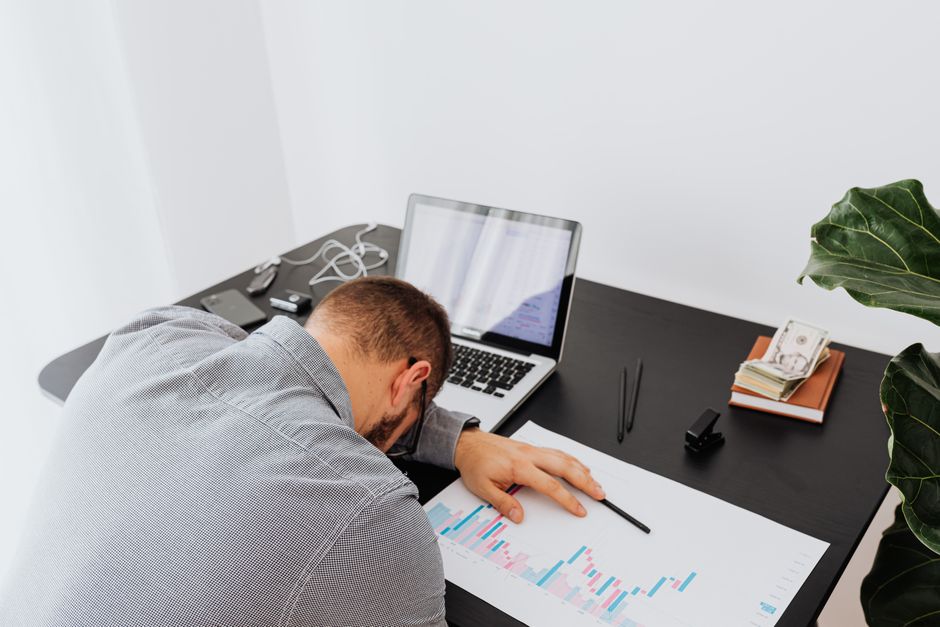
The next time you finish a long stretch of work, don’t immediately reach for the phone. Sit with the void for five minutes. Ask yourself: What do I actually need right now? It might be silence. It might be movement. It might be interaction. Whatever it is, make it an intentional act. Stop letting the algorithms dictate your recovery. You’re the lead manager of your own life—start acting like it.
Summary Checklist for Your Next Recovery Session
- Audit the Input: Are you consuming or creating? Check the Friction: Does this activity require the same "reCAPTCHA-like" cognitive struggle as work? Value the Agency: Did you make the choice, or did the software make it for you? Log the Result: Does your "refreshed or drained" status change based on what you chose?
True leisure isn't the absence of work; it's the presence of intention. Stop burning your attention on the wrong things, and you’ll find that you have a hell of a lot more to give when the workday actually starts.