I keep a running spreadsheet of apps that take more than 20 seconds to get me to the “meat” of the experience. It started as a hobby in 2013 when I was writing copy for a fledgling navigation startup, and it has since become a professional obsession. Over the last decade, I’ve watched the hardware in our pockets evolve from glorified calculators into pocket-sized supercomputers capable of rendering high-fidelity environments that would have made a 2010-era server rack blush.
But here is the irony: As our more powerful smartphones have gained the ability to process more data, run complex physics engines, and facilitate HD streaming without breaking a sweat, our collective patience has evaporated at a rate that far outstrips the pace of Moore’s Law.
In the world of mobile app design, we aren't just building for functionality anymore. We are building for a neurological expectation of instant gratification. If your app stutters, if the sign-up flow asks for my blood type before it shows me the homepage, or if the transition between screens feels like a lazy river rather than a high-speed rail, I’m bouncing. And I’m not the only one. We have reached a point where smartphone-first accessibility is no longer about "making it work on a phone"—it’s about making it work at the speed of human thought.
The Hardware-First Trap: Why "Faster" Isn't Always "Better"
We often fall into the trap of believing that because users carry more powerful smartphones, they want more complex experiences. This is the great lie of modern software engineering. When I test mobile sites on weak Wi-Fi—a habit I developed specifically to gauge just how much “bloat” a product team has hidden behind a fast 5G connection—I’m often horrified. Developers are using that extra processing power to load massive, unoptimized high-res video headers, heavy tracking scripts, and intrusive onboarding animations that do nothing but delay the user’s primary goal.
App performance is the new brand equity. If you think your users don’t notice a 300-millisecond delay in touch response, you aren't paying attention to the analytics. Users perceive "speed" as a proxy for "trust." If the app feels sluggish, we subconsciously assume the service is insecure, unpolished, or out of date. We don't Additional hints blame the device; we blame the brand.
Instant Access and the Death of the Loading Spinner
In the early days of mobile, we were conditioned to accept loading spinners. We watched that spinning grey wheel and assumed the internet was "doing its best." Today, the loading spinner is the digital equivalent of a "Keep Out" sign.
With HD streaming becoming the industry standard for everything from Netflix to live-streamed fitness classes, users expect the content to start playing before they’ve even finished settling into their chairs. When a user taps an icon, they expect the app to feel like an extension of their nervous system. Any delay in loading is perceived as a failure of the app developer, not the network.
The "Fast Loading" Checklist for Product Teams
- Skeleton Screens: Stop using spinners. Use skeleton layouts that provide a visual hint of the incoming content. It reduces the perceived wait time by tricking the brain into thinking the app is "already here." Optimistic UI: If a user hits "Like" or "Add to Cart," assume success immediately. Handle the background API call asynchronously. If it fails, deal with it gracefully—don't make the user wait for the server to confirm before you let them keep scrolling. Deferred Onboarding: If I have to provide my email, phone number, and a blood sacrifice before I can see your app's main feed, you’ve lost me. Get me in the app first. Ask for the data once I’ve found value.
The Shift Toward Real-Time Interaction
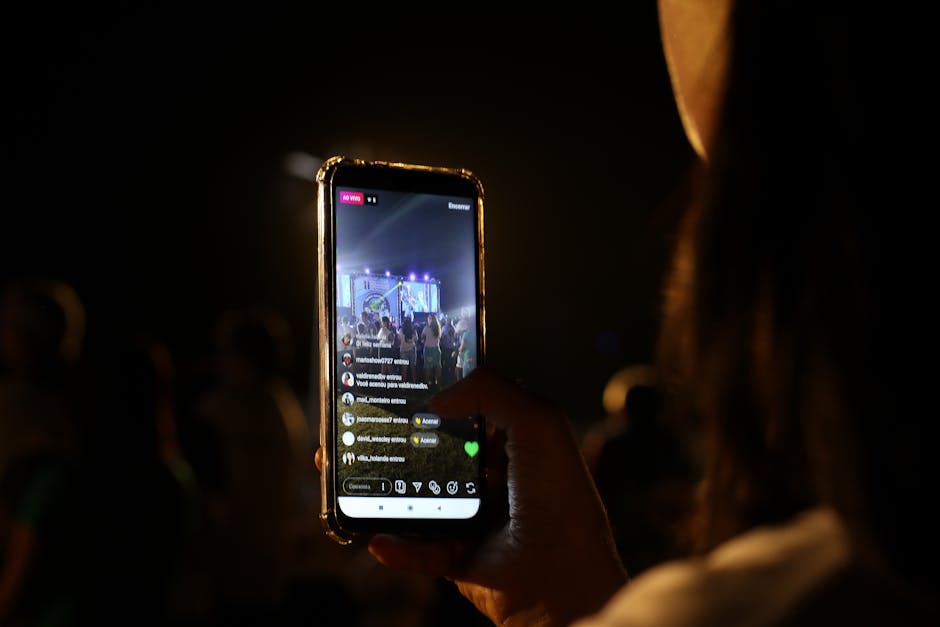
It’s not just about consuming content anymore; it’s about being part of it. The modern smartphone has democratized real-time interaction. Think about the way mobile gaming loops have evolved. It’s no longer about single-player progression; it’s about leaderboards, live chat, and collaborative raids that happen across continents in sub-millisecond windows.
When an app fails to offer this level of engagement, it feels static and dead. Users don’t want to watch a show; they want to chat in the sidebar, vote on the plot, or drop "reaction" stickers that animate on the broadcaster's screen. This is where more powerful smartphones actually pay off. They allow for the integration of haptics, augmented reality overlays, and real-time multiplayer syncing that would have been impossible on hardware from just five years ago.
Feature Expectation (2014) Expectation (2024) Content Loading Acceptable 3-5 second wait < 500ms or bounce Onboarding 3-5 minute account setup One-tap or SSO login Interaction Passive consumption Real-time feedback loops UI Feel Utility-based Immersive/FluidConvenience as a Loyalty Driver
I’ve spent 11 years looking at paywall screens and in-app payment flows. I’ve seen teams bury the "Logout" button so deep in the sub-menus that it feels like you're trying to cancel a landline subscription in the 90s. This is a short-term strategy that leads to long-term churn.
True loyalty in the era of high-performance mobile apps isn’t built on "lock-in" tactics; it’s built on frictionless convenience. If I can sign up with one tap, see your content instantly, and pay using a saved digital wallet without re-entering my billing address, I am infinitely more likely to stay. The moment your app requires a "convenience fee" of my time—meaning, making me tap more than necessary—my loyalty resets to zero.
Why Users Bounce: The UX Columnist’s Top Three Grievances
Vague Promises: Marketing copy that says "experience the future of streaming" but doesn't show me the library until I've verified my email. Show, don't tell. Poor Onboarding Paths: If you have an intro slideshow that I can’t skip, you’ve fundamentally misunderstood the modern mobile user. We know how to swipe. Let us explore. Obscured Settings: If I have to look for the logout button or the privacy settings, I’m questioning your transparency. If you have nothing to hide, don't make it look like you do.The Verdict: Speed is a Feature, Not an Extra
As our hardware continues to advance, the gap between what a phone *can* do and what we *expect* it to do will continue to narrow. The days of "it’s a mobile app, what do you expect?" are long gone. Thanks to the ubiquity of HD streaming and the near-instantaneous nature of modern cloud computing, the user has no tolerance for technical debt.
If you are a product manager, stop celebrating your "processing power" and start celebrating your "responsiveness." Your users aren't impressed by your 4K renders if they have to wait four seconds for the interface to initialize. They want a frictionless, high-performance experience that respects their time. And honestly? They’re right to demand it.
The smartphone-first era is here to stay. And in this era, the fastest, cleanest, and most transparent apps are the ones that will win the war for our attention. Because when everything is a tap away, the only thing that separates a market leader from an uninstalled app is the speed at which it invites the user to play.
Now, if you’ll excuse me, I have a few more apps to test on my commute. Let’s see which ones have fixed their bloated sign-up flows and which ones are still burying the logout button.